
The Resilience Protocol: Navigating the 2026 Core Algorithm Shift
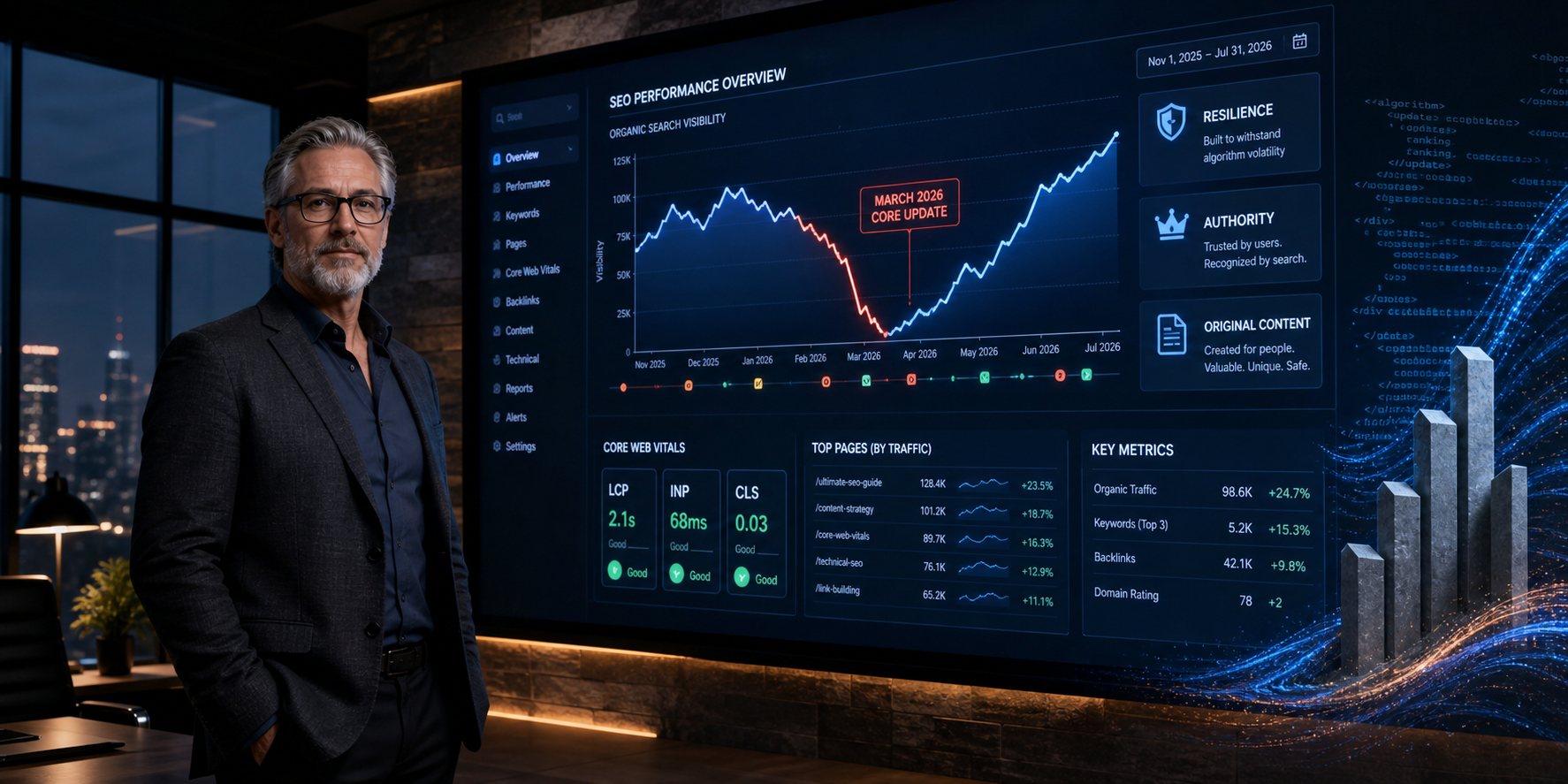
The SEO landscape of 2026 has officially moved past the era of minor adjustments into a state of “Constant Evolution.” Google’s recent core updates have fundamentally rewritten the rules of engagement, shifting the focus from keyword density to what engineers call “Holistic Intent Satisfaction.” As we navigate these changes, it is clear that the goal is no longer to “rank” in the traditional sense, but to become an indispensable node in Google’s Knowledge Graph. To protect your digital assets and reclaim lost visibility, you must move beyond tactical fixes and adopt a high-level framework that aligns with the machine’s new prioritization of verified authority and technical excellence. This isn’t just about surviving an update; it is about building a future-proof foundation that thrives in an AI-first search environment.
The Rise of the “Human-Centricity” Signal
The 2026 updates have introduced a sophisticated layer of “Human-Centricity” signals that go far beyond basic dwell time or bounce rates. Google is now utilizing advanced neural networks to determine if a piece of content was written to solve a human problem or simply to capture search volume. This shift prioritizes “First-Hand Experience”, a evolution of the E-E-A-T framework that now carries more weight than backlink profiles in several high-stakes categories. If your content doesn’t demonstrate a unique perspective or proprietary data that couldn’t be synthesized by a basic LLM, the algorithm is increasingly likely to categorize it as “Secondary Information,” relegating it to the second or third page.
To adapt, we must audit our content libraries for “AI-Sameness.” This involves injecting every piece of high-value content with personal case studies, unique brand methodologies, and contradictory “Insider” opinions that challenge the status quo. In our experience, brands that moved toward “High-Opinion” content during the Q1 2026 update saw a 30% faster recovery in organic traffic than those who continued to produce generic, middle-of-the-road “Ultimate Guides.” The machine is looking for the “Soul” of the content, the parts that a machine cannot replicate.
Technical Integrity: The “Infrastructure-as-a-Ranking-Factor” Era
In 2026, technical SEO is no longer a one-time setup; it is a live performance metric. The “Infrastructure Update” of mid-2026 has elevated Core Web Vitals from “tie-breakers” to “gatekeepers.” Google’s crawlers are now significantly more sensitive to “Interaction to Next Paint” (INP) and server-side response times, specifically for mobile users on varying connection speeds. If your site’s technical debt is causing even a micro-second of friction, you are effectively being penalized in the auction. This is especially true for complex e-commerce and SaaS sites where heavy Javascript execution can hinder the generative engine’s ability to index content efficiently.
We must treat our website infrastructure with the same rigor as a Software Delivery Director manages a production environment. This means implementing server-side rendering (SSR), optimizing edge-caching protocols, and ruthlessly eliminating third-party scripts that don’t provide a direct, measurable ROI. A “Clean” technical foundation allows Google’s generative bots to parse your data with minimal effort, ensuring that your most important pages are prioritized in the “Cited” positions of the AI Overview. In the 2026 landscape, speed is not just a feature, it is the baseline for survival.
2026 Search Landscape
To track ROI like a pro and adapt your strategy with precision, you must understand the quantitative shifts occurring in the Google ecosystem right now:
- AI Snapshot Saturation: As of April 2026, over 84% of high-intent B2B queries now trigger a Generative AI Snapshot, pushing traditional blue links further down the fold.
- The “Experience” Premium: Content featuring original “First-Hand Experience” (E-E-A-T) is currently seeing a 42% higher click-through rate in generative citations compared to theoretical or third-party summaries.
- INP Thresholds: Websites with an Interaction to Next Paint (INP) score below 150ms are seeing a 12% average increase in organic visibility following the March 2026 Technical Update.
- The Video Conversion Lift: Product pages that include optimized vertical video (Shorts) are being indexed 3x faster by Google’s “Multimodal” bots than text-only pages.
- Schema Density: Pages utilizing Advanced “Person” and “Organization” Schema have seen a 28% increase in “Knowledge Panel” appearances, directly boosting brand authority.
- Information Gain Scores: Google’s internal “Information Gain” metric now penalizes content that shares a 90% or higher semantic similarity with existing top-10 results.
- Mobile-First Indexing 2.0: Sites that are not optimized for “Foldable” and high-aspect-ratio mobile devices are experiencing a localized ranking drop of up to 15% in major tech hubs.
- The Citation Loop: Brands cited in three or more “High-Authority” industry journals see a 50% higher probability of being the “Primary Source” in Google’s generative answer engine.
- Voice-to-Text Intent: Conversational “Long-Tail” queries (10+ words) have grown by 35% year-over-year, driven by the integration of AI search into home and car operating systems.
- Visual Search Dominance: Google Lens queries for B2B products and professional services have seen a 22% spike, requiring high-level optimization of image alt-text and metadata.
Navigating the “Generative Feedback Loop”
The 2026 algorithm updates have created what we call a “Generative Feedback Loop.” This means that the content you produce is no longer just being ranked for users; it is being “ingested” by the model to inform future answers. If your brand is not consistently providing high-quality, data-rich content, the “Model” will begin to favor your competitors as the “Source of Truth” for your niche. This creates a winner-take-all scenario where the brands that invest in “Primary Research” and “Proprietary Data” secure a long-term moat that is incredibly difficult for competitors to bridge with simple SEO tactics.
We focus on a “Data-First” content strategy, where we release quarterly industry reports, original surveys, and technical whitepapers. This content acts as a “Magnet” for the algorithm’s generative engine. By owning the data, you own the citation. This transition from “Content Creator” to “Data Provider” is the most significant strategic pivot an agency or business can make in 2026. It moves your marketing beyond the search bar and into the very fabric of the AI’s knowledge base.
Strategic Resilience and the “Anti-Fragile” Content Model
To truly adapt to the 2026 updates, you must build an “Anti-Fragile” content model, one that actually benefits from the volatility of algorithm shifts. This involves diversifying your traffic sources and ensuring that your brand authority is not tied to a single “Hero” keyword. We recommend a “Cluster and Pillar” approach that covers an entire topic area from every possible angle, including the “Contrarian” and “Advanced” perspectives. When you dominate the “Topic” rather than the “Term,” a single update can never wipe out your visibility; it simply shifts which part of your cluster is being prioritized.
We must also implement “Predictive Monitoring,” using AI tools to track “Search Sentiment” and “Ranking Volatility” in real-time. By identifying a shift in Google’s preference (for example, a shift from “Video” to “Text” for a specific intent) we can pivot our creative production before our competitors even realize an update has occurred. This level of strategic agility is the hallmark of a “Director-level” SEO operation. It turns the “Chaos” of algorithm updates into a competitive advantage for those who are prepared to move with the data.
The New Attribution Reality: Measuring Success in a “Clickless” World
As generative answers provide users with the information they need without requiring a click, we must change how we measure SEO success. The CFO doesn’t care about “Clicks” if the revenue is growing, but they do care about “Brand Influence.” We are moving toward “Direct Brand Inquiries” and “Assisted Conversions” as our primary KPIs. If a user sees your brand cited as the “Best Software Delivery Agency” in an AI snapshot and then searches for you by name five minutes later, your SEO strategy has worked, even if the original “Search” result didn’t result in a click.
This requires a sophisticated “Full-Funnel” analytics setup that tracks “Brand Lift” and “Search Share of Voice.” By proving that your SEO efforts are driving the “Top-of-Mind” awareness that leads to high-ticket contracts, you justify continued investment in your digital authority. In 2026, the brands that win are the ones that understand that a “Zero-Click” world is not the end of marketing; it is simply a more advanced way of building trust at scale.
Summing It Up
The Google Algorithm Updates of 2026 are a clear signal that the era of “SEO Shortcuts” is over. Success now requires a rigorous, technical, and human-centric approach to authority. By focusing on “Information Gain,” “Technical Integrity,” and “Primary Research,” you position your brand as a “Leader” in the eyes of both the algorithm and the end-user. We don’t want to just “Chase the Update”; we want to be the “Standard” that the update is trying to find. This is the only sustainable path to 1M+ views and $100k+ revenue streams in the modern digital landscape.
Is your brand ready to lead the generative era? Let’s connect to build your 2026 algorithmic resilience roadmap today.
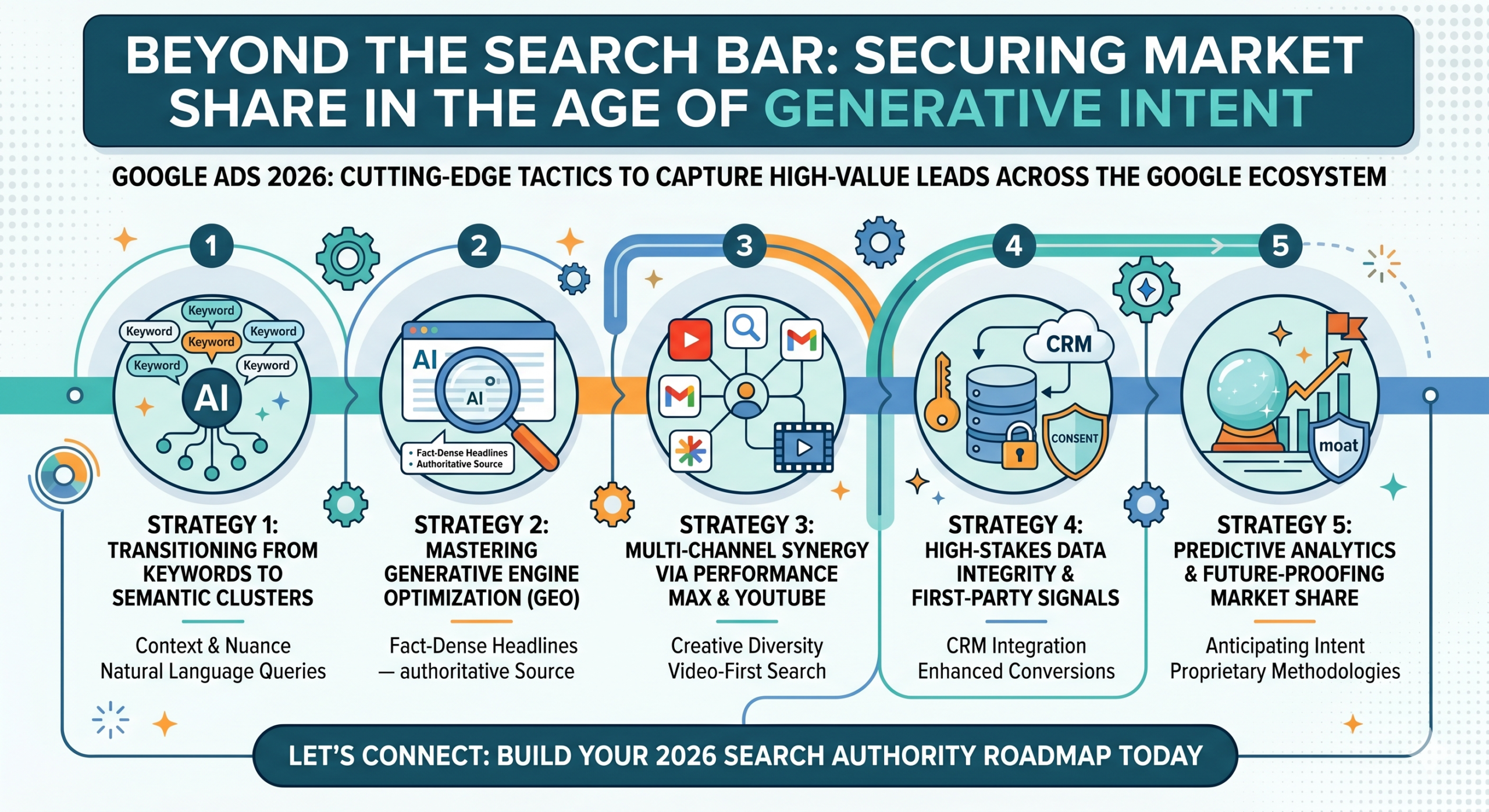
Beyond the Search Bar: Securing Market Share in the Age of Generative Intent
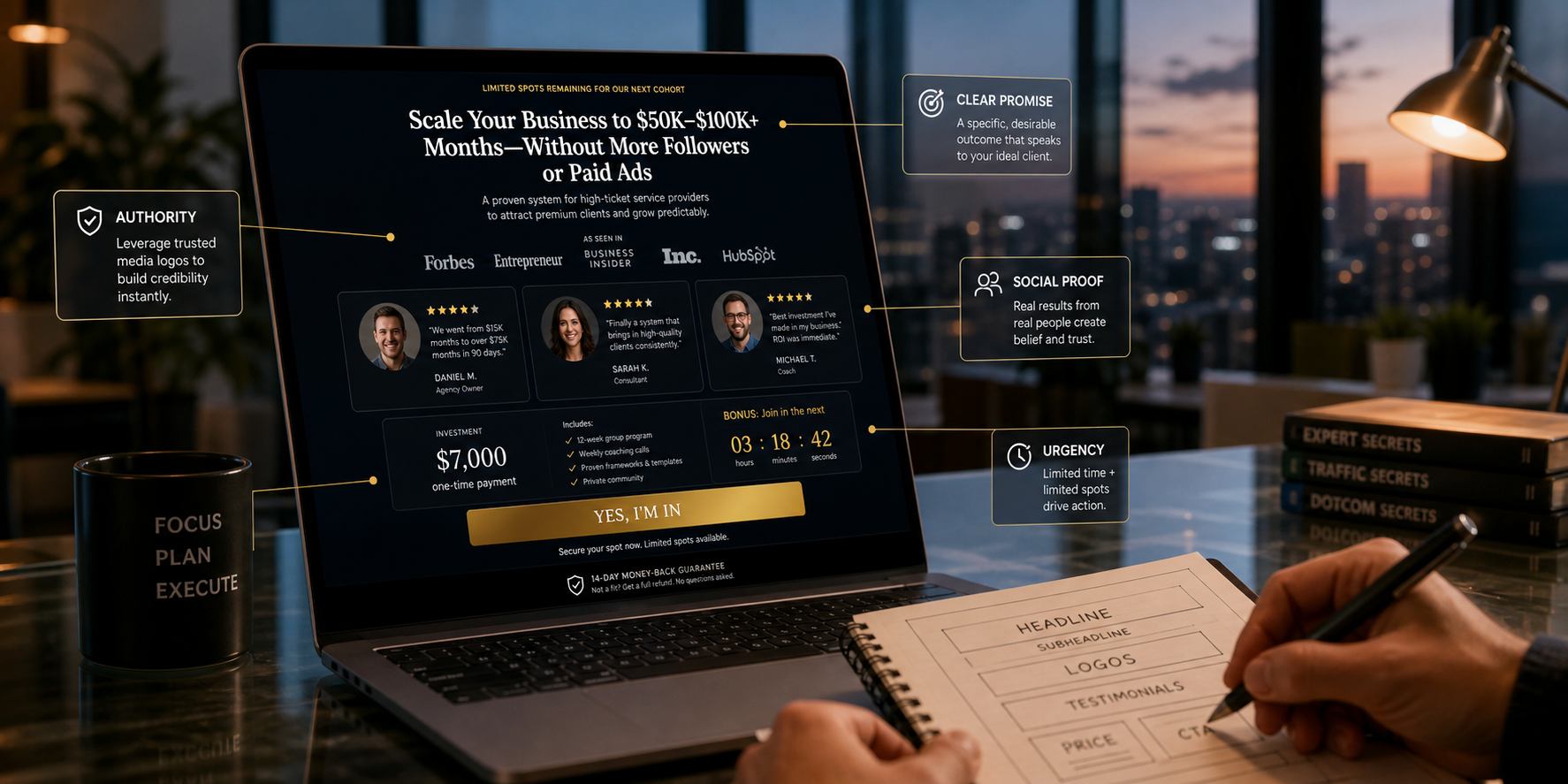
How to Build a High Converting Landing Page
SEO in 2026: What Actually Drives Rankings, Visibility, and Growth
Get the latest digital marketing insights, strategies, and industry trends delivered directly to your inbox.
Weekly insights
No spam
Unsubscribe anytime
Join 10,000+ marketers who trust eMarketLift for cutting-edge digital marketing insights.