
How to Build a High Converting Landing Page

In the 2026 digital economy, a landing page is no longer just a destination; it is a high-stakes filtering system designed to transform expensive traffic into measurable enterprise value. As the median conversion rate across industries stabilizes at approximately 6.6%, the gap between average participants and the top-tier 10% to 26% performers is defined by strategic architecture rather than aesthetic flair. To win in this landscape, you must move beyond the “one-size-fits-all” mentality and transition toward a presence-led, device-specific experience that solves for user intent with surgical precision. This isn’t about simply adding a button and a headline; it is about building a psychological roadmap that removes every micro-friction point on the path to the “Yes.”
The Economic Reality of the 2026 Landing Page
The financial impact of a landing page is often underestimated by those focused only on “likes” or “impressions.” For a Software Delivery Director or an Agency Owner, the conversion rate is the primary lever for scaling. If your current page converts at 3% and you optimize it to 6%, you have effectively doubled your revenue without spending an additional dollar on ads. In 2026, the cost of a “missed” conversion is higher than ever, with every second of load delay resulting in a 7% loss in conversion potential. Organizations that prioritize a technical and psychological audit of their conversion paths report significant shifts in their Marketing Contribution Margin (MCM), proving that the landing page is the most valuable real estate in your entire digital stack.
High-Conversion Engineering
To build a page that competes with the top decile of 2026 performers, you must understand the quantitative drivers of the modern conversion:
- The Personalization Premium: Implementing personalized CTAs (tailored to device, location, or lifecycle stage) results in a 202% higher conversion rate than default, static versions.
- The 2-Second Threshold: The critical tipping point for bounce rates is 2 seconds; pages that load in 1 second see conversion rates as high as 40%, which plummet to 29% by the 3rd second.
- The Scaling Law: Businesses that increase their total number of landing pages from 10 to 15 experience an average 55% jump in lead volume, allowing for more surgical persona targeting.
- Mobile Conversion Deficit: Despite mobile driving over 82.9% of total traffic, it converts 8% lower than desktop – a friction gap that represents millions in lost capital for unoptimized brands.
- The Form Friction Penalty: Reducing a lead capture form from 11 fields down to 4 results in a documented 120% increase in conversions, highlighting the high cost of “information greed.”
- Video Retention Impact: Embedding strategic video content helps users retain 95% of the message, leading to an average conversion lift of 86% for complex B2B offers.
- Email Traffic Authority: Traffic arriving via email nurture sequences converts at 19.3%, nearly triple the industry median for paid search.
- The Power of 40: Companies with 40 or more landing pages generate 12 times more leads than those with fewer than 5, by saturating specific intent clusters.
- Social Proof Specificity: Incorporating specific, data-backed testimonials (e.g., “Increased revenue by 40%”) rather than generic praise can drive a 19–34% conversion lift.
- Dynamic Mobile Lift: Utilizing dynamic landing pages, which adjust layouts based on real-time mobile signals, converts 25.2% more users on smartphones than static responsive designs.
The Psychology of the “Above-the-Fold” Hook
The success of your landing page is decided in the first 3 seconds of the interaction. This is where you must deploy the Serial Position Effect, ensuring the most critical information, your “Hook”, is the first thing processed by the human brain. Your hero section should not be an artistic statement; it should be a “Decision Catalyst” that answers three questions immediately: What is this? Why should I care? What do I do next? High-converting examples in 2026 utilize a high-contrast headline that repeats the exact promise made in the ad that brought the user there. This “Message Match” is the single most important factor in reducing initial cognitive friction and keeping the user on the page.
We move away from “we provide” language and toward “you get” outcomes. If you are selling a software delivery service, your headline shouldn’t be “Top-Tier Software Delivery.” It should be “Ship Your MVP 30% Faster Without Increasing Headcount.” This shifts the focus from your features to the user’s desired state of transformation. By pairing this headline with a “Risk-Mitigation” sub-headline, such as “Join 500+ Directors Who Optimized Their Output Today”, you leverage Social Proof and Loss Aversion before the user has even scrolled.
Eliminating Cognitive Load Through “Anti-Design”
In 2026, the most effective landing pages are often the ones that look the “simplest.” This is the Paradox of Choice in action: the more options you give a visitor, the less likely they are to take any of them. We focus on a minimalist “Anti-Design” philosophy that uses intentional white space to guide the eye toward a single, high-contrast Call to Action (CTA). Your page should have one goal and one goal only. If you have links to your “About Us” or your “Blog” in the header, you are inviting the user to leave your conversion funnel.
The visual hierarchy must be ruthless. Use size, color, and contrast to ensure the CTA is the most prominent element on the page. In 2026, Gaze Cueing is a powerful subtle tactic: if you use a hero image of a person, ensure their line of sight is directed toward the CTA or the headline. Humans are biologically programmed to follow the gaze of others. These micro-interactions, while invisible to the untrained eye, are the “silent salesforce” that drives your conversion rate from a median 6% toward that elite 20% tier.
The Mobile-Native Conversion Path
Since over 80% of your traffic is now smartphone-based, “mobile-responsive” is no longer the standard, mobile-native is. This means designing the page for the “Thumb Zone,” ensuring that the CTA and form fields are within easy reach of a one-handed user. High-performing examples in 2026 utilize “Sticky CTAs” that remain fixed at the bottom of the screen as the user scrolls, ensuring the “Yes” is always a single tap away.
Furthermore, we must account for the physical friction of mobile data entry. Instead of traditional text fields, we use “Single-Tap” options, dropdowns, and social login integrations. If you require a phone number, the mobile keyboard should automatically switch to the numeric pad. These “Infrastructure-level” optimizations reduce the Cognitive Friction that causes 81% of users to abandon a form after they’ve already started it. A mobile page that converts like a desktop page is the ultimate competitive advantage in the 2026 landscape.
Proof, Credibility, and the “Trust-Stack”
Once the user is interested, they immediately look for reasons to say “No.” This is where the Trust-Stack comes into play. Below the fold, your landing page must deploy a sequence of credibility signals that handle objections before they are even articulated. This includes “Real-Time Proof” (such as a notification of a recent purchase), certification badges, and high-authority client logos.
The structure of a winning testimonial in 2026 has evolved. Generic “Great service!” quotes are dead weight. We require a four-part narrative: The initial problem, the reason they chose you, the concrete result (with numbers), and the emotional impact on their business. When a prospect sees a testimonial that mirrors their own situation, it triggers Self-Efficacy Theory, making them believe that they too can achieve that result by clicking your button. This isn’t just “Social Proof”; it is a strategic mirror that reflects the prospect’s future success back at them.
Summing It Up
Building a high-converting landing page in 2026 is a technical and psychological discipline that requires constant iteration. By focusing on load speed, mobile-native design, and the elimination of cognitive load, you turn your landing page from a passive asset into a high-performance conversion machine. We don’t want to just “have a website”; we want to deploy a “Strategic Blueprint” that creates lasting enterprise value and captures market share with every click. The future belongs to the brands that treat their conversion rate as a financial priority, not a design afterthought.
Are you ready to engineer a landing page that converts at a top-tier level? Let’s connect to build your high-performance conversion roadmap today.
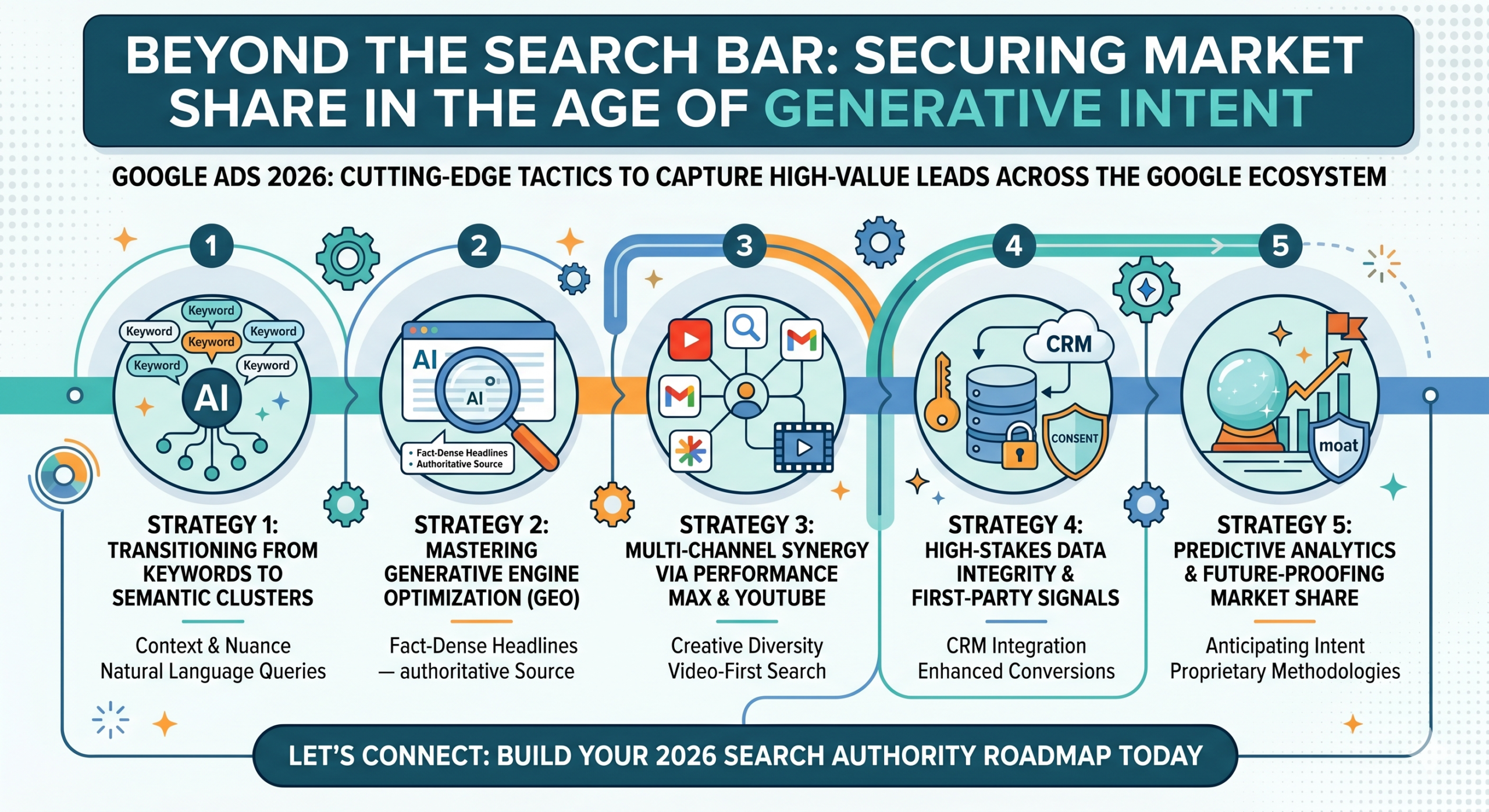
Beyond the Search Bar: Securing Market Share in the Age of Generative Intent

The Resilience Protocol: Navigating the 2026 Core Algorithm Shift
SEO in 2026: What Actually Drives Rankings, Visibility, and Growth
Get the latest digital marketing insights, strategies, and industry trends delivered directly to your inbox.
Weekly insights
No spam
Unsubscribe anytime
Join 10,000+ marketers who trust eMarketLift for cutting-edge digital marketing insights.