
AI Readiness Audit: Choose Your First Automation Project

Quick answer: An AI readiness audit reviews your workflows, data, systems, and team capacity to identify a useful first AI project. Start with a frequent, measurable task that has a clear owner and a manageable cost of failure. Agree how you will judge the pilot before choosing software.
Find the work worth putting on Autopilot
Imagine opening your business dashboard to find that yesterday’s inquiries have been organized, routine replies prepared and the right tasks assigned. That is the practical promise of AI Autopilot: a connected operating rhythm that keeps useful work moving while you concentrate on customers, judgment and growth. An audit identifies which parts of that picture are achievable with your processes and tools.
Start with a task diary rather than a software wishlist. For five working days, record each repeated task, its volume, the time you actively spend and the interruptions it creates. Include tasks you perform alone, such as preparing meeting notes, organizing research or drafting client updates. An individual contributor can reclaim focus without needing an enterprise transformation or a large technology budget.
Separate frequency from friction. A monthly report may take longer per item than an inquiry, but daily inquiries may consume more total attention. Also ask whether the output can be checked quickly. Extracting a requested appointment date is easier to verify than evaluating whether a customer should receive credit. The best first candidate combines meaningful repetition with a clear definition of a correct result.
Research supports testing the opportunity, not assuming a universal saving. A 2025 customer-support study involving 5,172 agents found a 15% increase in issues resolved per hour with AI assistance. That was one workplace and task type, not a forecast for your business. Your audit should establish whether a comparable improvement exists in your own process.
| Measure | Simple calculation | What it tells you |
|---|---|---|
| Weekly effort | Items per week × active minutes ÷ 60 | Find the largest recurring time commitment |
| Review burden | Minutes checking and correcting each AI result | Avoid moving work into an approval queue |
| Completion quality | Correctly completed cases ÷ tested cases | Decide whether the pilot meets your standard |
| Net capacity | Baseline hours − review, exception and upkeep hours | Estimate usable time released |
Consider a hypothetical consultant handling 50 inquiries a week at six active minutes each. That is five hours of work. If an assistant reduces preparation to two minutes per inquiry, it releases about 3.3 hours before maintenance and exceptions. It does not create 3.3 hours of profit. The consultant still needs a plan for that capacity, such as faster proposals or more time with paying clients.
Use the audit meeting to choose one trigger, one destination and one accountable owner. An inquiry-to-CRM brief is a stronger initial scope than “automate sales.” Specify which information the assistant may use, when a person approves the output and what happens if the CRM is offline. Those decisions become the foundation of an Autopilot workflow that can grow without becoming difficult to control.
What AI Autopilot means in practice
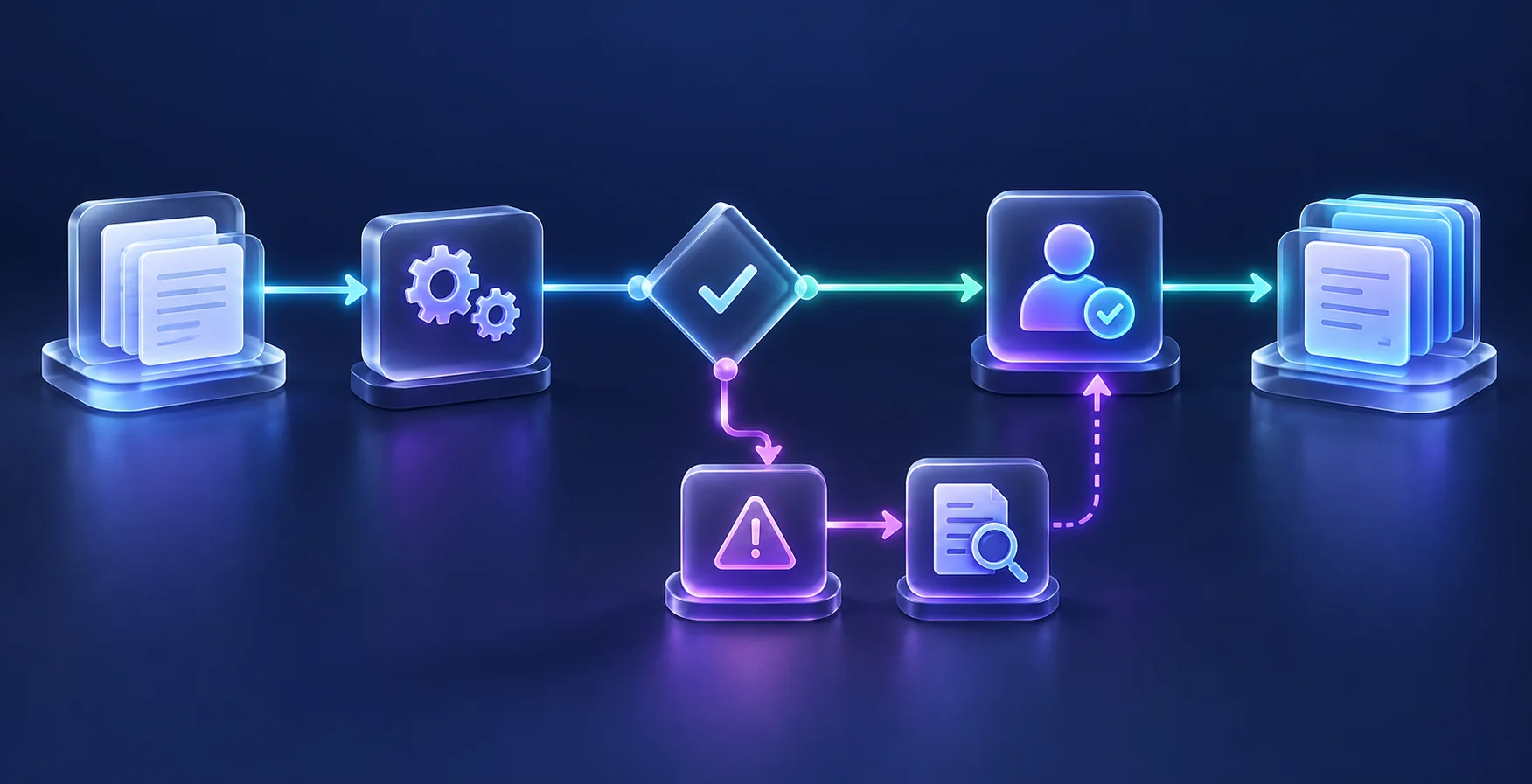
Think of AI Autopilot as a routine that can receive information, interpret it, prepare the next step and keep a record without you manually coordinating every handoff. It combines AI with ordinary software rules and integrations. A draft-and-review workflow is a useful starting level; narrowly approved actions can follow when testing shows they are dependable.
The opportunity is more than faster typing. Small businesses can make processes more consistent, while individual contributors can reduce context switching and protect time for specialist work. Keep an owner, a review queue and a stop control. The goal is a capable operating assistant with clear boundaries, not a promise that the entire business can run unattended.
What should an AI readiness audit include?
An audit should turn a broad ambition into a decision you can act on. For a small business, that means understanding where work slows down, which information people need, and whether your existing systems can support a change. Buying a tool before answering those questions often creates another disconnected task.
Use five audit areas: business outcomes, process reliability, data readiness, integration access, and people. The deliverable should be a prioritized list of opportunities, a proposed pilot, estimated effort, and specific acceptance criteria. A list of fashionable tools is not enough.
Map one workflow before evaluating tools
Choose a process your team can explain from beginning to end. Record its trigger, input, decisions, output, and exceptions. For an appointment inquiry, the steps might be form submission, service-area check, CRM record creation, staff assignment, and a confirmation message.
- Volume: How many items arrive in a typical week?
- Time: How much active work does each item require?
- Quality: What errors or delays happen now?
- Ownership: Who handles exceptions and approves changes?
Observe actual examples rather than relying on an idealized process diagram. If two employees follow different rules, agree the rules before automating them.
Use a simple priority scorecard
Rate each candidate from 1 to 5 for business value, frequency, data readiness, and ease of checking the output. Separately describe the consequences of a wrong result. Use the score to organize discussion, not to hide a serious risk inside an average.
Illustrative comparison: Routing an inquiry using a selected service and postcode may be easier to test than letting an AI system issue a binding quote. Both can appear valuable, but their failure costs differ. A deterministic rule may also solve the routing problem without AI.
Shortlist a project only if you can name its owner, obtain appropriate system access, and define a fallback. If the inputs are inconsistent, a data-cleaning task may be the best first project.
Define the pilot and its acceptance criteria
Write a one-page brief: scope, excluded actions, allowed data, expected output, review point, budget, and rollback method. Build a test set containing normal cases, missing information, duplicate requests, and unusual wording. Use synthetic or appropriately approved records during development.
Measure current handling time and error rates before the pilot. Then compare the same measures after implementation, including time spent reviewing AI output. Set your own threshold for acceptable quality. A fast system that requires frequent correction may not save work.
Risk management needs an owner throughout the project, not just at launch. The NIST AI RMF core provides a useful reference for organizing responsibilities and evaluation.
Leave the audit with a decision
The useful outcomes are proceed, improve the process first, or defer. Proceed when the pilot has a clear benefit, realistic integration path, and testable boundaries. Improve the process when inconsistent records or missing ownership would undermine the result. Defer when cost or risk outweighs the likely benefit.
Your next purchase should follow that decision. Keep the audit brief so you can revisit it when systems, staffing, or business priorities change.
Your first week: turn the idea into evidence
Choose ten representative examples from the task you want to improve, using synthetic or appropriately approved information. Write down the expected result for each before testing. Include one incomplete request, one duplicate and one request outside the intended scope. Time the complete task, including checking and correction, rather than the generation step alone.
Review the results with the person who owns the work. Identify which errors come from unclear instructions, missing source information or an unreliable connection. Change one issue at a time and repeat the relevant examples. Leave the week with a specific decision: continue the pilot, repair the process first or stop. This produces useful evidence even when the first idea is not ready for automation.
Readiness score: find a project you can actually test
A readiness score is a conversation starter, not a scientific prediction. Give each candidate one point when it has a clear owner, a stable input, an agreed output, an easy quality check and enough recurring volume to matter. An inquiry summary with all five characteristics is easier to pilot than a vaguely defined “AI sales agent.” A low score tells you what needs preparation before buying software.
For example, a solo designer spends four hours every week turning discovery notes into proposal briefs. The information is available and the output is easy to compare with the notes, but no standard brief exists. Create that template first. Then test whether AI can fill it accurately. Improving the process is part of AI adoption, not a delay to the exciting work.
Do not average away a serious missing condition. A high-volume task without permission to use its data is not ready simply because its other scores look attractive. The next action should be specific: name an owner, agree the template or select appropriate sample information. That makes the score useful to a nontechnical decision-maker.
Capability growth does not replace readiness
Stanford’s April 2026 AI Index summary highlights rapid capability gains and continuing weaknesses. Use that trend to revisit tasks you previously ruled out, then test a small representative sample. Better demonstrations do not settle whether your information, team and connected systems are ready for a reliable pilot.
Frequently asked questions
Do we need an AI audit before every automation?
A small, well-understood task may only need a short readiness check. Broader or more consequential projects need deeper assessment. Match the effort to the decision.
Can our existing software be enough?
Yes. CRM rules, forms, templates, and ordinary integrations may solve the problem. Add AI where interpreting variable language or generating a draft creates a clear benefit.
What should we bring to a consultation?
Bring a workflow description, sample inputs without confidential information, approximate volume, current systems, and the outcome you want to measure.
What does AI readiness mean?
It means having a clear task, usable information, an accountable owner and a way to check results before expanding the system.
Can a solo business benefit?
Yes. Repeated research, intake and drafting can be useful starting points when the time released supports work you actually need to do.
What is the best first task?
Choose a recurring task with a recognizable correct output, such as organizing an inquiry into an approved brief.
Do we need new software immediately?
No. Map the process first. Existing forms, CRM rules and templates may solve part of the problem without an additional subscription.
How much sample data is enough to start?
Begin with representative normal and unusual cases. The initial sample helps design the pilot; higher-impact decisions require broader evaluation.
What should stay outside the first pilot?
Exclude commitments and consequential decisions that your team cannot confidently verify, reverse or recover through an agreed process.
What should an audit deliver?
Expect a prioritized opportunity, a defined pilot, explicit assumptions, an owner and a scorecard explaining what would justify proceeding.
Choose a practical next step
Explore AI Strategy & Audit or request a free consultation. Bring one workflow, the systems involved, and the outcome you want to improve. A focused starting point makes the scope and success measures easier to agree.
Get practical AI adoption, automation and growth insights delivered to your inbox.
Weekly insights
No spam
Unsubscribe anytime
Practical AI and growth insights from eMarketLift. Subscribe for future articles.