Social Media

TikTok Marketing for Real Estate: Sell Homes Faster

Stop renting attention, and start building a real estate demand engine.

Real estate marketers do not need more content. They need more qualified attention, faster lead response, and a tighter path from curiosity to showing.

TikTok has become one of the few channels where property discovery, agent credibility, neighborhood storytelling, and lead capture can happen in the same buyer journey, especially now that the platform reaches 153 million users aged 18+ in the U.S., or 55.7 percent of American adults in that age group.datareportal+1

The Bottom Line

  • TikTok is no longer a fringe play for agents. It reaches nearly half of U.S. internet users, 47.3 percent, and its U.S. ad reach grew by 15.2 million users year over year, which means the attention pool is still expanding.
  • Real estate wins on TikTok when you stop posting listings as inventory and start packaging them as local lifestyle stories, buyer education, and proof of market authority.
  • The agents who move homes faster usually connect short-form video to a response system, CRM [customer relationship management system], fast follow-up, and clear appointment offers.
  • Organic content builds trust, paid amplification accelerates reach, and the real financial delta is created when both are measured against MCM [marketing contribution margin, or the profit left after variable costs and marketing spend].
  • If your current social strategy is mostly brochure content, TikTok gives you a way to turn listings into demand events instead of passive posts.

Most brokerages still treat TikTok as a visibility channel. We see it differently. For the right operator, it is a market-speed channel, one that compresses the time between first impression, inquiry, showing, and signed agreement.

Why should real estate brands treat TikTok as a demand engine?

TikTok matters for real estate because the audience is already there, the format matches how properties sell online, and the discovery model still rewards useful creative over pure budget muscle.

In the United States, 324 million people were internet users at the end of 2025, internet penetration was 93.1 percent, and 254 million social media user identities were active across platforms. That means real estate attention is not migrating online, it is already online, and your listing presentation is competing inside a very crowded digital environment.

What we have observed across a decade of performance marketing is simple: buyers rarely move from confusion to inquiry because they saw a polished brochure, they move because a piece of content made the opportunity feel specific, local, and timely.

NAR reports that social media delivers the highest number of quality leads among tech tools used by REALTORS®, and its 2024 technology survey shows 87 percent use Facebook, 62 percent use Instagram, 48 percent use LinkedIn, and 25 percent use YouTube. That tells us something important: agents already believe social works, but many are still under-allocated to the formats where short-form video drives the fastest discovery and the strongest narrative control.

TikTok is also not standing still. Its U.S. ad reach rose 11.0 percent year over year and 4.8 percent quarter over quarter, which is a strong signal for a platform that many real estate teams still treat as optional.

Where does TikTok outperform traditional real estate posting?

The old model was simple: upload a few listing photos, boost a post, wait for inquiries. The problem is that static social rarely creates momentum.

TikTok works better when your property is the backdrop for a stronger narrative, such as “what $850K buys in this ZIP code,” “three design mistakes lowering resale value,” or “the fastest-moving neighborhoods for young families this quarter.” That style fits how users discover content on the platform, and NAR specifically notes that TikTok trends, sounds, and short-form property tours have become a natural fit for real estate marketing.

Homes do not sell faster because the camera quality is better. They sell faster when the content removes uncertainty before the showing.

What kind of buyer behavior does TikTok support?

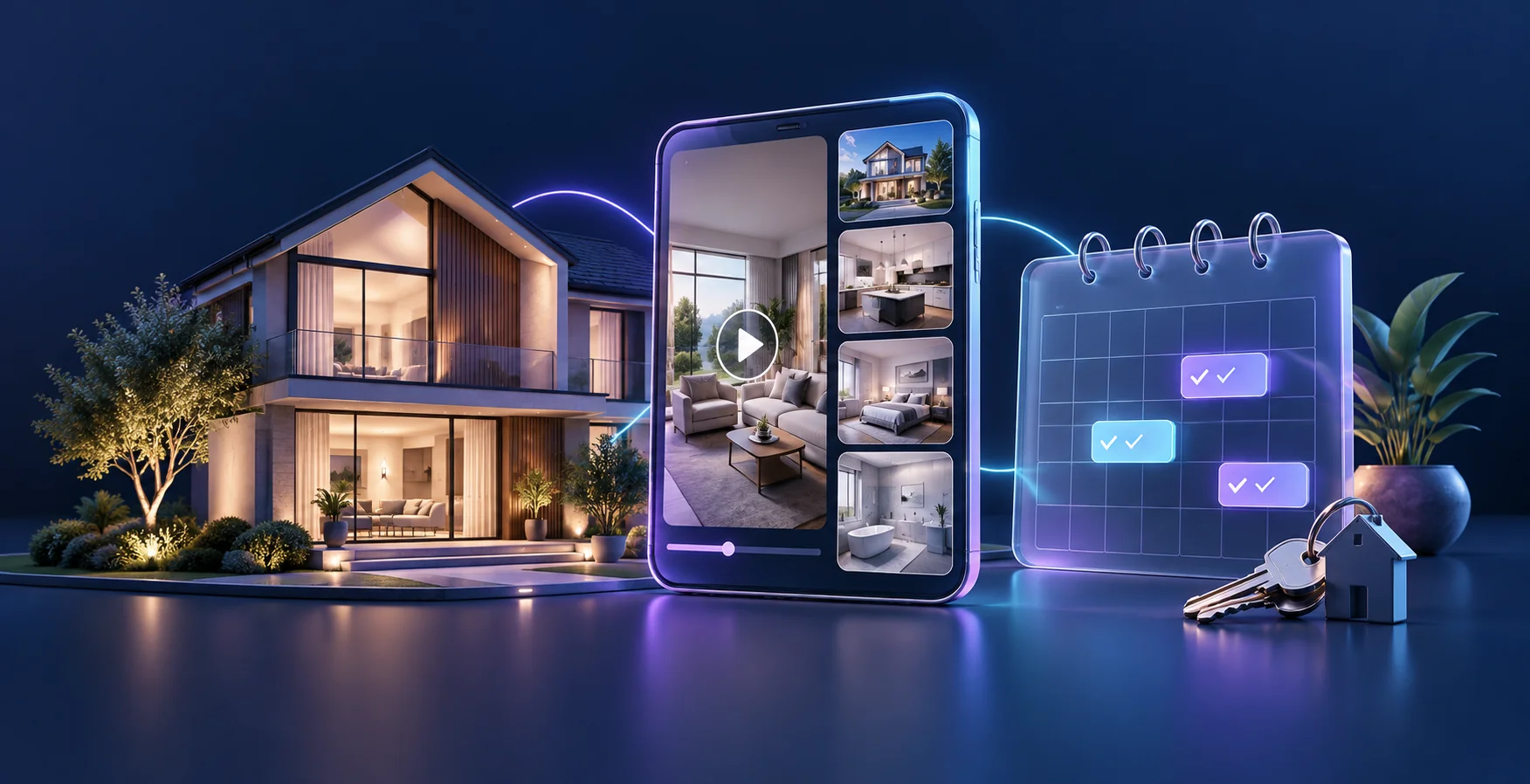
TikTok is built for repeated exposure. A buyer can see a neighborhood clip on Monday, a pricing explainer on Wednesday, and a property walkthrough on Friday, then message you when the right listing appears.

That sequencing matters because Attribution [crediting which marketing touchpoint helped create the lead] is rarely last-click in real estate. The buyer often converts after several soft signals, which is exactly why TikTok should be treated as a compounding trust channel, not a one-post lottery ticket.

How do we build a TikTok content system that moves homes faster?

The winning system is not “post more.” It is “post in clusters,” where each asset strengthens the next and each theme moves a buyer or seller closer to action.

In our two decades of market experience, the agencies and brokerages that scale fastest are the ones that stop treating content as decoration and start treating it as sales infrastructure.

Content architecture

Start with three content lanes.

The first is listing acceleration. This includes property tours, renovation highlights, before-and-after transformations, and “best feature” clips that isolate the most emotionally persuasive part of the home.

The second is local authority. This includes neighborhood guides, school-area explainers, commute comparisons, insurance or tax context, and “what changed in this market this month” clips.

The third is transaction confidence. This includes mortgage myths, inspection red flags, pricing strategy, staging advice, closing-cost explainers, and seller preparation tips.

If your channel only posts listings, you are asking strangers to trust you before you have earned any authority.

Listing launch sequence

Every listing should trigger a content sprint, not a single upload.

Day one should open with a high-curiosity teaser. Day two should show the best room or view. Day three should explain who the home is for. Day four should zoom out into neighborhood lifestyle. Day five should answer objections, such as HOA [homeowners association] concerns, lot size tradeoffs, or renovation potential.

That sequence creates multiple entry points. Some users respond to aspiration, some to utility, and some to price logic. Your job is not to guess which one will work, it is to publish all three.

Local authority loops

Real estate on TikTok performs best when the property is tied to a broader local story.

That is why “market explainer” content often outperforms pure listing content over time. It creates retention, repeat viewing, and brand memory, which means you stop renting attention one post at a time and start owning a local category.

The fastest-growing real estate TikTok accounts do not just market homes. They market confidence in the decision behind the home.

How do we turn views into qualified showings and seller leads?

This is the section most teams miss. Reach is not revenue. Watch time is not pipeline. Views only matter when they are connected to a clear next action and a follow-up system that respects buyer urgency.

We have found that the financial delta is created when content, lead routing, and response speed are designed together, not managed as separate departments.

What should the call to action look like?

The CTA [call to action, or the next step you want the viewer to take] should match the stage of intent.

For cold traffic, offer lightweight next steps: “DM ‘tour’ for the spec sheet,” “Comment ‘price’ for the full breakdown,” or “Get this week’s new listings in your inbox.” For warmer traffic, move to “Book a private showing,” “Request the neighborhood report,” or “See the seller prep checklist.”

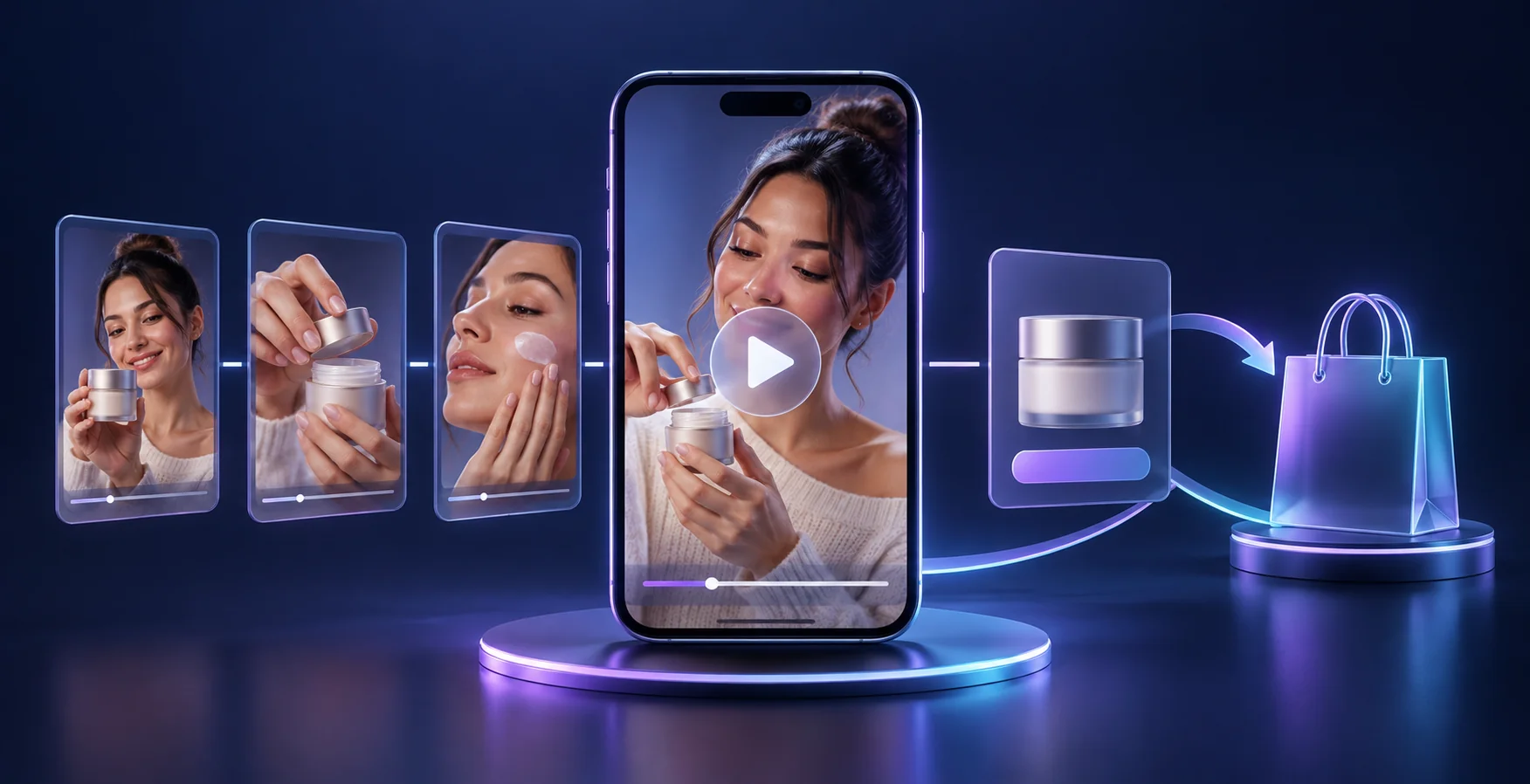
Those CTAs work because they lower friction. They also create a better handoff into your CRM, where every lead can be tagged by interest, property type, location, and stage.

How fast should the team respond?

In real estate, content buys the moment, but speed closes the gap.

If a prospect comments on a video or requests a property packet, your team should have a response script, a routing rule, and a same-day follow-up sequence. That can include SMS [text message], email automation, and a rep call, depending on lead quality and compliance requirements.

The market does not reward the most creative team for long. It rewards the team that is easiest to buy from.

How do we connect TikTok to the rest of the funnel?

Use TikTok as the attention layer, landing pages as the conversion layer, and CRM automation as the nurture layer.

Your links should carry UTM parameters [small tracking tags added to URLs], your forms should segment buyer versus seller intent, and your follow-up should match the content the person engaged with. If the video was about first-time buyers, the lead should not get an email about luxury downsizing.

That level of alignment improves Conversion Rate [the share of visitors who take the action you want] because it preserves context. In plain English, the follow-up feels relevant instead of generic.

What should we measure in 2026?

Most teams still report vanity metrics first. That is backward. Views are useful, but only as upstream signals.

The smarter dashboard starts with pipeline value, appointment rate, cost per qualified lead, seller listing rate, and MCM [marketing contribution margin]. Then it works backward into content efficiency.

In our experience, the strongest TikTok real estate programs track four layers at once: content health, lead quality, response speed, and revenue contribution.

2026 Performance Benchmarks

Benchmark

2026 Signal

Strategic Read

U.S. TikTok adult audience

153 million users aged 18+

Large enough for national reach, local targeting, and niche property segmentation.

TikTok reach of U.S. adults 18+

55.7%

More than half of adult Americans can be reached through TikTok ads.

TikTok share of U.S. internet users

47.3%

Nearly half of online Americans can be reached on-platform.

TikTok U.S. ad audience growth, YoY

+15.2 million, +11.0%

Still a growth channel, not just a mature awareness channel.

TikTok U.S. ad audience growth, QoQ

+7.05 million, +4.8%

Recent momentum remains positive.

U.S. internet users

324 million

Real estate discovery is overwhelmingly digital.

U.S. internet penetration

93.1%

Most of your viable audience is already reachable online.

U.S. social media user identities

254 million

Social is not supplemental, it is a mainstream demand surface.

U.S. adults 18+ on social media

222 million, 80.8%

The addressable adult audience for social-led real estate marketing is enormous.

U.S. mobile connections

417 million, 120% of population

Buyers and sellers live on mobile, which favors short-form vertical content.

Median U.S. mobile speed

154.48 Mbps

Fast mobile delivery supports video-heavy property browsing.

Median U.S. fixed broadband speed

285.59 Mbps

Rich video tours and landing-page experiences load well for most users.

REALTORS® who say social delivers the highest number of quality leads

NAR identifies social media as the top source among tech tools used to get quality leads

Social content is not just for branding, it is a lead source.

REALTOR® platform usage

87% Facebook, 62% Instagram, 48% LinkedIn, 25% YouTube

Most agents are active on social, but many are still underbuilt in TikTok-native systems.

Global social media use

5.79 billion social media user identities in April 2026

Consumer attention keeps consolidating inside social ecosystems.

Global TikTok benchmark

TikTok had at least 1.59 billion users worldwide in January 2025, with +31.2 million added year over year

Platform scale remains relevant for multinational brands and franchise groups.

Typical TikTok age cluster

Average age of TikTok users fell somewhere between 25 and 34 in January 2025

Strong overlap with first-time buyers, young families, and move-up households.

Marketer video benchmark

48% of marketers reported creating videos for ads in 2025

Video is no longer optional in competitive acquisition.

Video media spend benchmark

41% of marketers spent money on video ads in 2025

The market is funding video because it influences demand.

Which KPIs actually matter for a brokerage?

Track these weekly: lead-to-showing rate, showing-to-offer rate, seller consult rate, average days from lead to appointment, and MCM [marketing contribution margin].

Track these daily: hook rate [how many viewers stop scrolling], watch time, profile visits, DMs [direct messages], landing-page conversion rate, and response time. When daily engagement rises but weekly qualified lead volume falls, you do not have a content problem, you have a funnel problem.

The highest-performing teams never confuse attention with progress. They measure the movement from view to conversation, conversation to showing, and showing to revenue.

How do we scale TikTok without wasting budget?

Scale comes from operational discipline. Organic content tells you what resonates. Paid spend tells you what to amplify. But neither one creates durable growth unless your workflow is built for consistency and compliance.

What we have observed across local, multi-location, and national campaigns is that waste usually comes from three places: weak creative testing, poor lead handling, and disconnected reporting.

Paid amplification

Do not put ad spend behind every listing. Put spending behind the assets that already prove they can hold attention.

That usually means top-performing organic clips, neighborhood explainers, and objection-handling videos. Paid media should extend proof, not subsidize weak messaging.

Privacy compliance

Real estate marketing is personal. People are disclosing budget, location, family plans, and timing. That means privacy and account security matter.

NAR advises professionals to use unique passwords, enable two-factor authentication, and understand the privacy settings of each social platform. That baseline discipline matters more as teams add multiple users, vendor access, and CRM integrations.

Operational efficiency

Build a simple weekly operating rhythm.

Monday, review performance by content lane. Tuesday, script and batch film. Wednesday, edit and schedule. Thursday, launch follow-up assets and retargeting. Friday, review lead quality and sales outcomes with the team.

Scaling TikTok for real estate is not about chasing trends all day. It is about turning a local knowledge advantage into a repeatable production and response system

How does TikTok marketing improve enterprise value, not just attention?

This is where most advice gets too tactical. Views do not increase enterprise value. Predictable demand does.

When TikTok is managed well, it lowers the cost of trust-building, increases inbound lead velocity, shortens the distance between listing launch and market awareness, and helps a firm build local brand memory at scale. That matters because repeatable attention reduces dependence on portals, third-party lead sellers, and expensive short-term paid acquisition.

In our two decades of agency work, the strongest marketing systems are the ones finance can understand. That is why TikTok should be evaluated through MCM [marketing contribution margin], CAC [customer acquisition cost], lead quality, and downstream revenue, not just engagement.

If a content program produces more showings, better seller consult volume, and lower paid acquisition dependency, then TikTok is not a content experiment. It is a margin-improving asset.

The strategic recommendation is straightforward: treat TikTok as a market-education engine, connect it to a disciplined lead system, and measure it like an investment vehicle, not a popularity contest.

Book a strategic growth consultation with eMarketLift today, and let us build the system that moves your market.

People Also Ask

Q: Does TikTok marketing really work for real estate agents?

A: Yes, but not when it is used as a digital flyer board. It works when the content blends property storytelling, local market knowledge, and a strong follow-up offer.

Q: What should real estate agents post on TikTok?

A: Post listing tours, neighborhood explainers, pricing advice, buyer mistakes, seller prep tips, renovation insights, and local lifestyle content. The strongest channels rotate between inventory, expertise, and trust-building.

Q: How often should a real estate business post on TikTok?

A: For most teams, consistency beats volume. Three to five strong posts a week, organized around clear content lanes, usually outperforms random daily posting.

Q: Should brokerages use organic TikTok or paid TikTok ads?

A: Both. Organic content proves message-market fit, while paid media helps scale the winners to targeted audiences.

Q: What is the biggest mistake in real estate TikTok marketing?

A: Treating views as success. The real success metric is qualified conversations that become showings, listings, and signed deals.

Sources

Tags:
Never Miss an Update

Get the latest digital marketing insights, strategies, and industry trends delivered directly to your inbox.

Weekly insights

No spam

Unsubscribe anytime

Join 10,000+ marketers who trust eMarketLift for cutting-edge digital marketing insights.

You’re In! Thanks for Subscribing
Welcome to our digital marketing community! We’re excited to share insider marketing tips, growth strategies, and resources that will help your business thrive. Keep an eye on your inbox — your first email is already on its way
Thanks for Reaching Out! We’ll Be in Touch Soon.
We’ve received your request — thank you for considering eMarket Lift as your digital growth partner. Our team will follow up within one business day to learn more about your needs and how we can help.